Tweed Shire Council
Campaigned on the "fake" Wollumbin, Arakwal and Bundjalung National Parks, the housing crisis, granny flats on rural properties, and an end to commercial groundwater extraction (The Echo).
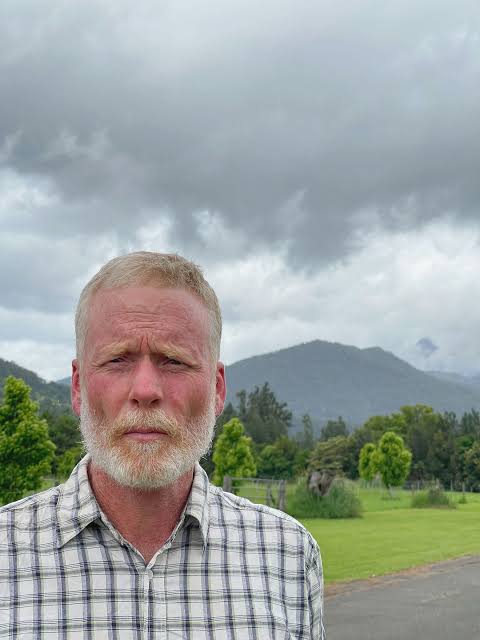
Eungella · Tweed Valley · NSW
Fifth-generation pioneer descendant, environmental sawmiller, ecotourism operator — and a relentless campaigner for Mount Warning.
Stewardship, sawmilling and service
James McKenzie's family has lived and worked the land around the Tweed caldera since the 1800s. A descendant of regional pioneer families, he has spent his life in the agricultural and forestry economy of the Northern Rivers — not as a passive conservationist, but as an active environmental manager.
As an environmental sawmiller he operated multiple mills harvesting Camphor Laurel — a highly invasive species — for export to Asian markets, serving as the last director of the region's Camphor Laurel cooperative and turning an ecological liability into an economic asset. He worked for decades with Landcare and Tweed Shire Council on the Lower Oxley riparian project, managed an irrigation water licence, and partnered with NSW National Parks to donate seeds of the small-leafed tamarind (Diploglottis campbellii) to a cryogenic genetic repository.
His civic record includes Past President of the Murwillumbah Apex Club, Past Chairman and Deputy of Tweed and Coolangatta Tourism, Past Deputy of the Northern NSW Ecotourism Association, and founding President of the Mt Warning Restorers — credentials documented in his 2021 council candidate profile in The Echo.
A century of public climbing
Mount Warning — Wollumbin — is the central remnant vent of a vast shield volcano active some 23 million years ago, which once covered an area roughly 100 by 80 kilometres. When the volcano fell silent, erosion stripped the shield away, leaving the hardened plug that towers today over the World Heritage-listed Gondwana Rainforests (Mount Warning, Wikipedia; Tweed Regional Museum).
Lieutenant James Cook sighted the peak from the sea in 1770 and named it Mount Warning, a navigational marker for the hazardous reefs off Point Danger. In 1909, public funds carved a 4.4-kilometre zig-zag bridle track up its flanks; when the track grew over in 1922, local residents paid council workers out of their own pockets to clear it (Robert Onfray, Stealing a Mountain).
So began a century-long tradition: generations of Australian families climbing together to watch the sunrise from the first place on the mainland to catch the light.
The fight for public access
In 2014 the NSW Government declared the park above 600 metres an Aboriginal Place under heritage law. In March 2020 the summit track was closed, officially for COVID-19 safety — but while other parks reopened, Mount Warning stayed padlocked (NSW National Parks; The Guardian, 2022).
The Right to Climb movement, which McKenzie supports, alleges — citing internal NPWS meeting minutes — that safety chains near the summit were removed in August 2020, and that protection of the historic 1909 stone retaining walls was rejected lest maintenance undermine the case for permanent closure (Right to Climb, 2024; Right to Climb, 2025). The closure has been extended to at least July 2027, with locals reporting threats of $10,000 fines for walking past the gate.
Right to Climb estimates that over 500,000 visitors were deterred in four years — a loss to the Tweed economy it models at $25 million in direct spending, rising to some $54 million once accommodation and hospitality are counted (source).
McKenzie disputes the official custodial narrative outright. He argues the Bundjalung designation is a bureaucratic fabrication, that the true custodians are the Ngarakwal people, and that the mountain's traditional name is Wulambiny Momoli — claims he has pressed since a 2007 meeting with then Aboriginal Affairs Minister Reba Meagher, and through the 2010 Goorimahbah "Place of Stories" controversy (The Echo, 2024; Tweed Valley Weekly).
"How can the public experience the spiritual significance of this land if they do not climb the summit and witness creation."
The campaign continues through petitions and organised civil disobedience (Reopen the summit track — iPetitions).
Elections as exposure, not ambition
McKenzie describes himself as "completely apolitical". He says he does not advertise and does not expect to be elected — his candidacies are a calculated mechanism to put his claims on the public record.
Tweed Shire Council
Campaigned on the "fake" Wollumbin, Arakwal and Bundjalung National Parks, the housing crisis, granny flats on rural properties, and an end to commercial groundwater extraction (The Echo).
NSW State Election — Lismore
Ran to expose what he calls the failure of Native Title and Aboriginal Affairs, stating openly he had no intention of taking the seat (The Echo).
Tweed Shire Council
Championed state exempt-development laws allowing two tiny houses on farms without a DA, against council opposition (The Echo).
Federal Election — Richmond
Took the Mount Warning closure and the Native Title argument to the federal stage (The Echo candidate profiles).
528 acres in the shadow of the caldera
At Eungella, NSW 2484 — the Tweed Valley Eungella, not the Queensland national park near Mackay — McKenzie's property offers 528 acres of wilderness with a kilometre of river frontage, four kilometres of tributaries, waterfalls, freshwater turtles, fireflies at dusk and a thriving platypus population. A herd of 125 head of cattle keeps the pastoral tradition running alongside the tourism (Hipcamp listing; Visit The Tweed; Visit NSW).
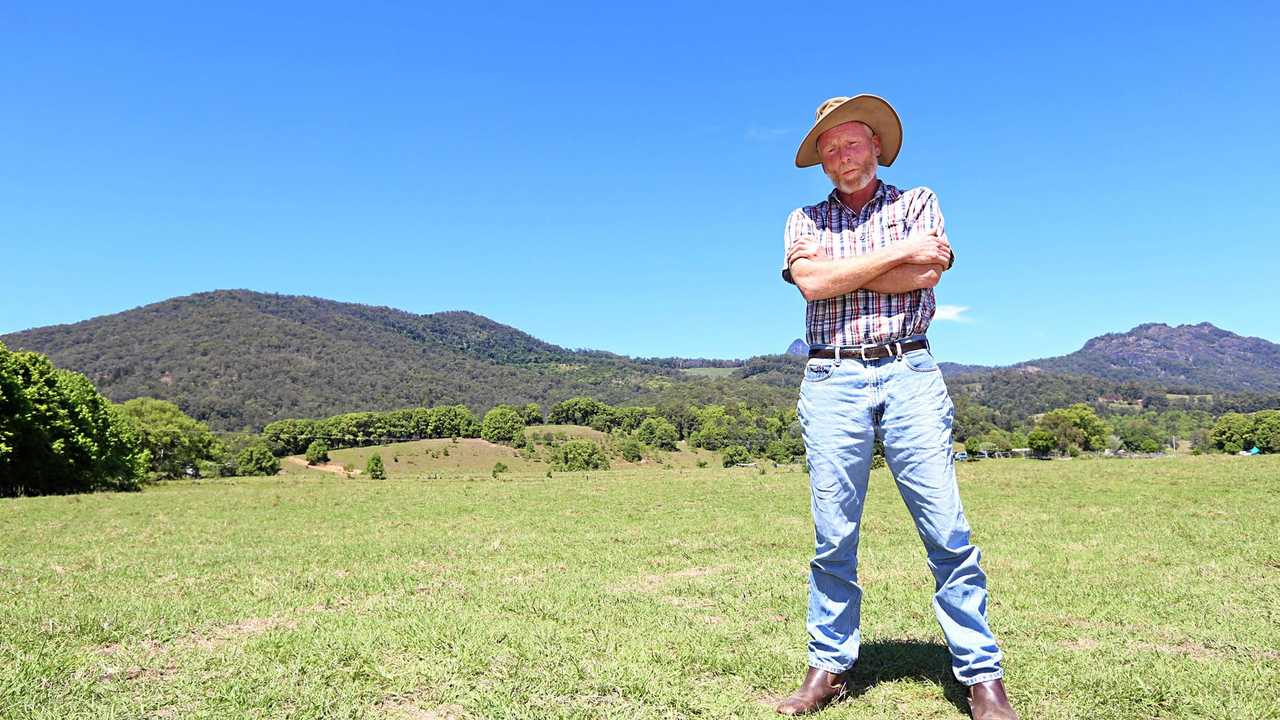
Operating through Hipcamp with 110 sites and a 93% approval rating across hundreds of reviews, the property caters to everyone from solitary wild campers to 40-tonne semi-trailers — and sits next door to a Hare Krishna farm offering tours, workshops and yoga retreats.
White Fig Main Camp & Top Camp
Large capacity for big caravans and RVs, a roofed communal area for wet weather, elevated mountain views and easy river access.
Heavy Vehicle Camp
Takes vehicles up to 20 metres — buses, Winnebagos, truck campers and semi-trailers — with excellent river access and an easy walk to the neighbouring farm.
Platypus Point & Walkway
Shaded sites draped in native wisteria, directly above active platypus nesting holes — for wildlife photographers, ecotourists and quiet couples.
River Frontage & Paddock Camping
Open grass sites with catfish nesting holes, crystal fossicking, deep swimming holes, off-leash pet freedom and unobstructed views of the Mount Warning peak.
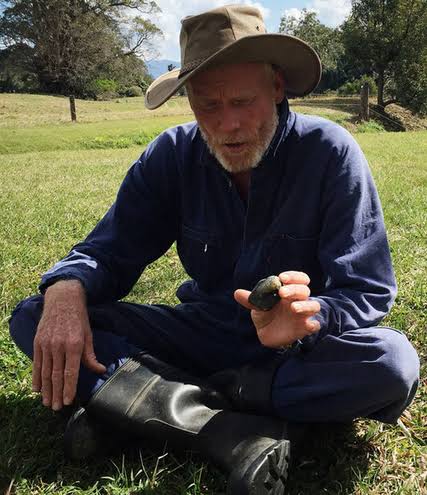
This is an authentic, off-grid wilderness stay: facilities are basic, there is no potable water — bring your own — and light sleepers should ask for the secluded back-paddock sites, away from the neighbour's entrance bridge.
528 acres · 110 sites · 93% approval on Hipcamp
Trial bikes and the Wollumbin Skyway
Two proposals dominate the road ahead: opening the property's rugged terrain to registered trial bike clubs, and an audacious cable car to the summit of Mount Warning.
Observed trials — a non-speed motorcycle discipline of balance and precision over boulders, logs and creek gradients — suits the Eungella topography. Access would be governed strictly by the framework of the Civil Liability Act 2002 (NSW), under which a landowner is not liable for harm arising from the obvious risks of a "dangerous recreational activity" where risk warnings are given (see also Etheringtons Solicitors' summary):
A cable car to the summit answers every argument for the closure at once. It bypasses the eroded 1909 track, the fragile stone walls and the removed chains entirely — and it democratises the mountain, carrying the elderly, the disabled and young children over the Gondwana canopy without a footfall on the soil. Precedents like Far North Queensland's Skyrail show high-volume ecotourism coexisting with living heritage, and the Skyway could recover the estimated $54 million the closure has cost the valley — recasting McKenzie from critic to architect of the region's economic resurrection.
Every claim above, linked at the source
Statements of political opinion and contested historical claims on this page are James McKenzie's own, drawn from the cited interviews, profiles and campaign materials.